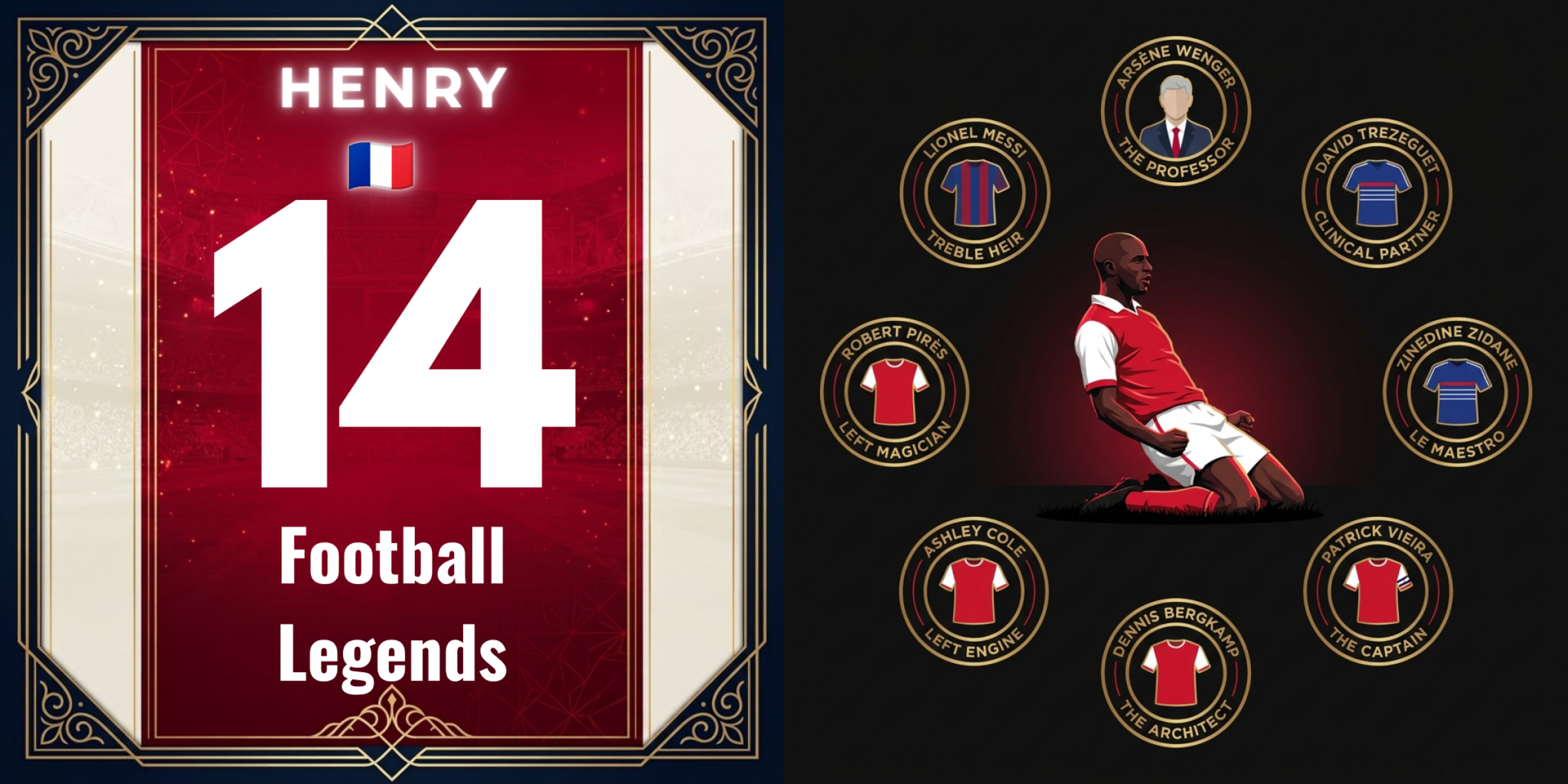
Welcome back—Jonoren here.
Following our breakdown of Fabio Capello’s disciples, the tactical experiment we are dissecting today is none other than Wenger’s Disciples: The Alchemy of Stojković and Bergkamp!
To construct this dream lineup, three baseline rules must first be respected:
📌 Standard Selection Criteria:
- The player must have been active during the golden era of 1994 to 2006—the era that forged my deepest tactical fascination with world football.
- The selection must strictly align with the theme: managed directly by Arsène Wenger at Nancy, Monaco, Nagoya Grampus, or Arsenal.
- Every pick must be a recognised legend of world football.
However, if chosen without boundaries, the squad would naturally be overrun by Arsenal’s immortal 2003–04 Invincibles. To push this theoretical thought experiment to its absolute limit, I have imposed two uncompromising special constraints:
🔥 Special Constraints:
- Constraint 1: Exactly one player per nation (11 nations, 11 singular talents). (Given the sheer volume of French icons nurtured by Le Professeur, allocating France’s solitary berth demands the ultimate sacrifice.)
- Constraint 2: The non-negotiable core must be the simultaneous coexistence of Dragan Stojković and Dennis Bergkamp. (Two generational mavericks whose combined spatial intellect redefines the geometry of the pitch.)
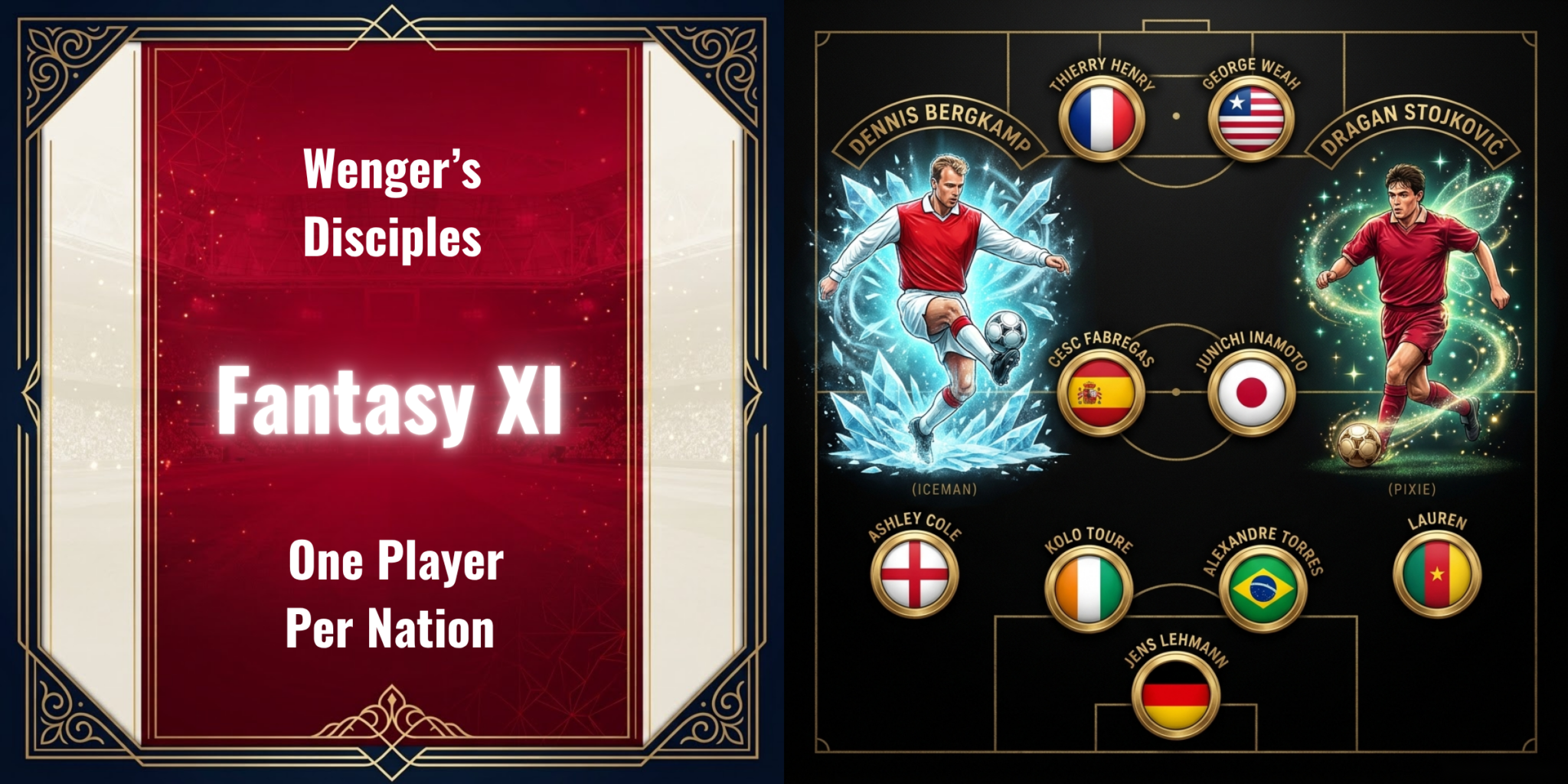
Selected through pure tactical conviction and subjective obsession, here is the ultimate collective designed to bring Wengerball to life.
Let’s break down the manager’s profile, player selection, and on-pitch tactical dynamics!
👑 Arsène Wenger: Manager Profile & Team Concept

| Category | Profile / Data | Key Tactical Insight |
|---|---|---|
| Manager | Arsène Wenger | The visionary professor who famously declared: “Football is an art, like dancing. It should leave a feeling of beautiful music in the hearts of those who watch.” |
| Major Clubs Managed | AS Monaco, Nagoya Grampus Eight, Arsenal FC | The revolutionary tactician who engineered Arsenal’s historic 2003–04 unbeaten Premier League campaign (The Invincibles). |
| Selection Premise | Connecting Nagoya and London: The convergence of two supreme No. 10s! | Did Wenger’s transformative success with Stojković in Japan pave the way for his liberation of Bergkamp in England? Only Wenger could harmonise both geniuses at peak creative freedom. |
| Tactical Concept | Asymmetric 4-4-2: Left-sided Invincibles synergy meets right-sided Japanese-African kinetic power | With Cesc Fàbregas and Junichi Inamoto anchoring the engine room, four world-class attacking minds dismantle defensive blocks through fluid geometric transitions. |
Tactical Context:
From the French Riviera with AS Monaco, to the J.League with Nagoya Grampus Eight, and across 22 legendary years at Highbury and the Emirates with Arsenal, Arsène Wenger dismantled rigid conventions wherever he set foot.
Looking back across the extraordinary disciples Wenger nurtured across Europe and Japan, one tantalizing tactical question seized my imagination:
“What would happen if Dragan Stojković (‘Pixie’) and Dennis Bergkamp shared the exact same pitch under Arsène Wenger?”
In 1995, Wenger arrived in Japan to take charge of a struggling Nagoya Grampus side. Rather than berating an intensely frustrated Stojković—who was collecting red cards and picking fights with referees—Wenger engaged him in quiet, philosophical dialogue—reminding him that when he played with joy rather than anger, nobody on the pitch could stop him. Rejuvenated, Stojković captured the 1995 J.League MVP award.
Did that profound Japanese breakthrough give Wenger the psychological blueprint to later treat Dennis Bergkamp not as a volatile luxury, but as an untouchable footballing artist?
Under Wenger’s gentle intellectual guidance, these two chess grandmasters would never clash for the ball. Instead, they would weave an irresistible symphony. Navigating the brutal restriction of one player per nation, here is the definitive starting eleven.
🏆 Arsène Wenger’s Disciples: The Definitive Starting XI (One Player Per Nation)
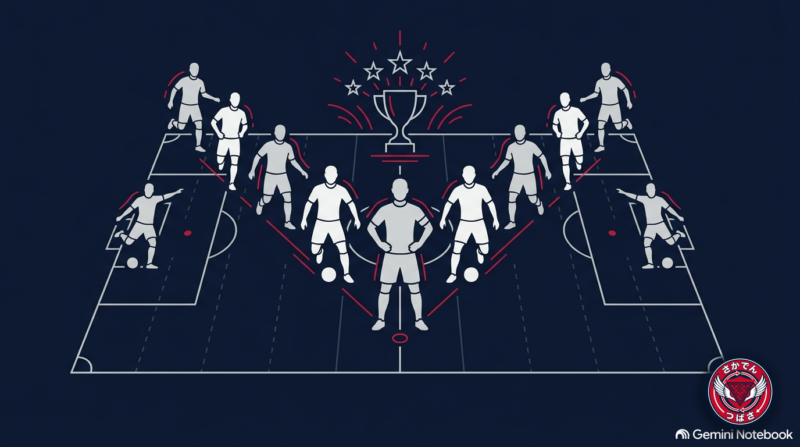
⚽ Player Roster & Strategic Roles
Eleven world-class profiles who survived the stringent filter of “one player per nation,” presented in tactical position order:
| Shirt No. | Pos. | Player | Nation | Archetype & Tactical Profile | Tactical Justification & Selection Rationale |
|---|---|---|---|---|---|
| 1 | GK | Jens Lehmann | Germany | The Roaring Sentinel: Audacious sweeping range, commanding aerial dominance, and fiery leadership. | The goalkeeper position came down to Seaman vs. Lehmann. To preserve England’s outfield quota for left-back, the Invincible German shot-stopper takes the gloves. |
| 2 | DF | Lauren (Laureano Bisan-Etame Mayer) | Cameroon | The Indomitable Converted Full-Back: Unyielding physical combativeness fused with clean midfield passing. | Cameroon’s elite representative. Given the scarcity of world-class right-backs under Wenger, the converted midfield engine of the Invincibles was a foregone conclusion. |
| 5 | DF | Alexandre Torres | Brazil | The Cerebral Sweeper: Flawless positional anticipation and cultured distribution from deep. | Brazil’s pick. The defensive rock of Wenger’s Nagoya Grampus and son of legendary 1970 World Cup captain Carlos Alberto. Edges out Gilberto Silva to anchor the right side. |
| 28 | DF | Kolo Touré | Ivory Coast | The Kinetic Recovery Shield: Explosive recovery pace, boundless stamina, and aggressive front-foot tackling. | Ivory Coast’s jewel. Discovered by Wenger at ASEC Mimosas, his searing pace provides the ultimate insurance policy behind a high defensive line. |
| 3 | DF | Ashley Cole | England | The Relentless Overlapping Dynamo: World-class transition stamina and telepathic understanding down the left channel. | England’s solitary berth. Selected ahead of Tony Adams, Sol Campbell, and David Seaman to guarantee absolute dynamism and high-speed synergy on the left flank. |
| 19 | MF | Junichi Inamoto | Japan | The Unshakeable Midfield Engine: Immense physical core equilibrium, aggressive ball-winning, and vertical driving power. | Japan’s representative. The emotional heartbeat and physical engine of this XI. Japan’s first Premier League pioneer unleashed at the peak of his athletic powers! |
| 4 | MF | Cesc Fàbregas | Spain | The Visionary Compass: Metronomic tempo control, 360-degree spatial vision, and laser-guided line-breaking deliveries. | Spain’s generational playmaker. Plucked from La Masia at 16, Cesc anchors the double pivot, dictating transition angles and threading penetrative passes into the frontline. |
| 10 | MF | Dragan Stojković | Serbia | The Balkan Magician: Hypnotic close control, velvet first-touch cushioning, and game-breaking passing vision. | Serbia’s immortal maestro. Primary Protagonist #1. Wenger’s soulmate at Nagoya Grampus, drifting inside from the right half-space to weave pure magic. |
| 14 | MF | Dennis Bergkamp | Netherlands | The Pitch Architect: Sublime spatial cognition, freezing defensive structures with an impossible first touch. | Netherlands’ icon. Primary Protagonist #2. Operating from the left half-space, the Dutch master dictates the geometry of the final third. |
| 12 | FW | Thierry Henry | France | The Highbury King: Devastating acceleration from the left 45-degree angle, pairing sublime finesse with ruthless finishing. | France’s solitary slot. Selected ahead of Patrick Vieira, Emmanuel Petit, and Robert Pires as Wenger’s undisputed magnum opus. |
| 9 | FW | George Weah | Liberia | The Kinetic Freight Train: Unstoppable solo transition power, savage acceleration, and predatory finishing. | Liberia’s Ballon d’Or legend. Discovered by Wenger at Monaco for just £50,000 and developed into the only African footballer in history to capture world football’s supreme individual honor. |
😭 Notable Omissions: Legends Who Missed the Cut
Due to the iron constraint of “one player per nation,” these generational titans had to be left behind:
| Player | Position | Nation | Strategic Reason for Omission |
|---|---|---|---|
| Patrick Vieira | MF | France | Sacrificed with immense heartbreak because France’s solitary spot was awarded to the club’s greatest-ever striker, Thierry Henry. |
| Sol Campbell | DF | England | Misses out because England’s solitary allocation was dedicated to world-class left-back Ashley Cole. |
| Tony Adams | DF | England | The eternal “Mr. Arsenal” misses out for the exact same structural reason as Campbell: the strict one-player-per-nation ceiling. |
| David Seaman | GK | England | Sacrificed to install Jens Lehmann in goal, keeping England’s slot available for the outfield backline. |
| Gilberto Silva | MF | Brazil | Brazil’s single berth was awarded to Nagoya Grampus defensive cornerstone Alexandre Torres, leaving the invisible wall on the sidelines. |
| Robin van Persie | FW | Netherlands | The Dutch slot was dedicated entirely to “The Architect,” Dennis Bergkamp. |
| Jürgen Klinsmann | FW | Germany | Ineligible due to Germany’s solitary berth being utilized by Jens Lehmann between the posts. |
⚽ Wengerball Formation & Tactical Dynamics (4-4-2)
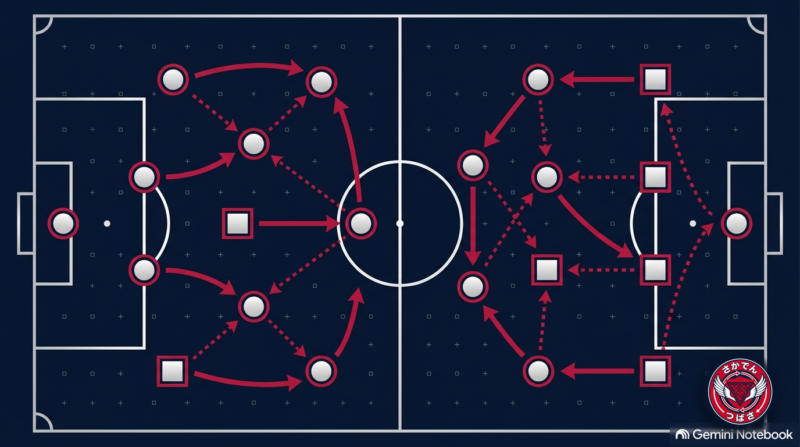
1. The Asymmetric 4-4-2 System (Left: Highbury Fluidity | Right: J.League & African Power)
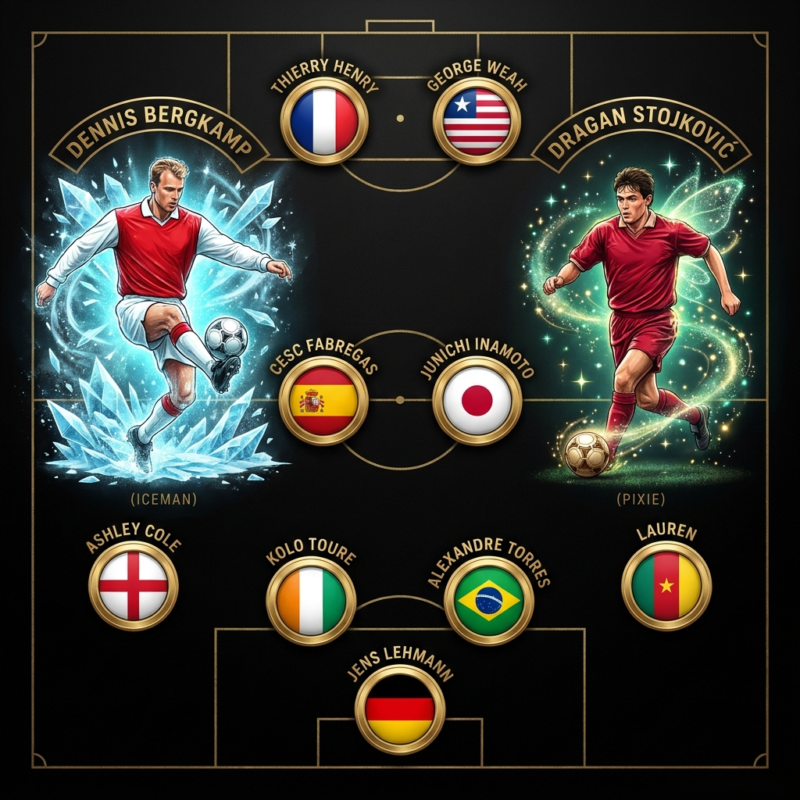
- Goalkeeper (GK): Jens Lehmann. An aggressive sweeper-keeper whose proactive positioning and ferocious vocal command compress the space behind a high defensive line.
- Defensive Line (Back 4): From left to right: Ashley Cole, Kolo Touré, Alexandre Torres, and Lauren.
On the left, Cole and Touré provide the blistering recovery velocity of the Invincibles. On the right, Torres acts as the cerebral defensive general—organizing offside traps and stepping out with cultured ground passes—while Lauren locks down the right perimeter with raw physical authority. - Double Pivot (Central Midfield): Cesc Fàbregas on the left, Junichi Inamoto on the right.
Cesc acts as the primary distributor, dictating the tempo with laser-guided long and short balls. Alongside him, peak-condition Inamoto serves as the dynamic enforcer—snapping into duels, dispossessing opposing playmakers, and surging vertically through midfield transition lanes. - Wide Playmakers (Free Midfielders): Dennis Bergkamp on the left, Dragan Stojković on the right.
Neither is a conventional touchline winger. Both operate as inverted playmakers, naturally migrating into the inside half-spaces (Zone 14) to create suffocating numerical overloads between the opposition’s defensive and midfield lines. - Front Two (Strikers): Thierry Henry on the left, George Weah on the right.
Arguably the most devastating transition strike partnership ever conceived—blending Olympic-level sprint velocity, imposing upper-body power, and ice-cold finishing.
2. Tactical Mechanics: How Stojković and Bergkamp Coexist
The defining tactical brilliance of this side lies in its deliberate structural asymmetry: the left flank embodies the telepathic touchline combinations of Arsenal’s Invincibles, while the right flank channels the raw physical power of Africa and the technical finesse of Japan.
🛡 Defensive Structure: African Athleticism Meets Brazilian Intellect in Rest-Defence
Wenger’s tactical philosophy demanded a suffocatingly high defensive block to win possession in the opponent’s half.
In this setup, right centre-back Alexandre Torres orchestrates the backline with veteran calm, reading passing lanes before they develop. Any ball pumped over the top into the vast space behind the defence is instantly swallowed by the supersonic recovery pace of Kolo Touré and the sweeping instincts of Jens Lehmann.
Meanwhile, Junichi Inamoto operates as the primary disruptor in central midfield, using his immovable core to smash into opposing ball-carriers and ignite instant counter-transitions.
🪄 Offensive Dynamics: The White-Line Symphony of Stojković and Bergkamp
The moment possession is secured, this frontline presents opposing managers with an unsolvable mathematical crisis.
| Attacking Phase | Tactical Trigger & Combination Play | Resulting Goal Mechanism |
|---|---|---|
| ① The Highbury Revolving Door (Left Channel) | Bergkamp drops deep to bait the opposing right centre-back into no-man’s-land, while Ashley Cole overlaps at full sprint. | Vacating the left half-space allows Thierry Henry to burst into his stride, receiving on the turn to curl his trademark finish into the far corner from 45 degrees. |
| ② The Pixie Dance & Sonic Breakaway (Right Channel) | Inamoto wins possession with a crunching tackle and feeds Stojković, who freezes two defenders with an exquisite drag-back. | “Pixie” clips a defence-splitting pass into space; George Weah drives 50 yards unassisted, shrugging off challenges before rifling into the roof of the net. |
| ③ Zone 14 Harmonic Resonance (Dual Maestro Overload) | Cesc drives a vertical ball into Stojković between the lines, who plays a cushioned, no-look flick across the D to a surging Bergkamp. | Bergkamp kills the ball dead with his “God Touch,” slipping a reverse pass into the six-yard box for Henry or Weah to tap into an empty net. |
The skeptics’ question—“Can Stojković and Bergkamp truly coexist?”—is dissolved the moment the ball begins to roll.
Neither man was ever an egoist demanding 50 touches per sequence; they were perceptive chess grandmasters whose primary joy lay in decoding space.
When Stojković drifts centrally to command the ball, Bergkamp instinctively shifts two yards into the blind spot of the opposing pivot. When Bergkamp pauses to freeze time, Stojković glides into the vacated channel. The opposition’s defensive anchor is caught in a permanent cognitive loop.
And beneath their feet rests the twin foundation of Cesc’s geometric range and Inamoto’s tireless industry.
For Japanese football enthusiasts, witnessing a prime-condition Inamoto—elevated by Wenger’s tactical trust—fearlessly winning balls and feeding deliveries to Pixie, Bergkamp, and Henry is the ultimate tactical catharsis.
💭 Conclusion: The Unfiltered Poetry of Arsène Wenger’s Legacy
Confining France’s wealth of talent to Thierry Henry; reserving England’s berth for Ashley Cole; trusting Nagoya hero Alexandre Torres in central defence; and empowering Junichi Inamoto in the engine room—this Fantasy XI began under suffocating constraints, but blossomed into pure aesthetic harmony.
Arsène Wenger once summed up his philosophy in an interview with The Sunday Times:
“For me, football is first and foremost a game. It has a framework, yet should leave some part for freedom of expression.”
On the left, the silky, one-touch passing of Arsenal’s greatest era.
On the right, the hypnotic improvisation of Dragan Stojković and the primal, untamable force of George Weah.
Eleven men bound not by passports or defensive dogmatism, but by the universal dialect of beautiful football.
This is the eternal romance of Arsène Wenger’s footballing soul.
If you were granted access to the vast catalogueue of Wenger’s former disciples, what kind of “one player per nation” dream XI would you build?
Grab your tactics board, embrace the constraints, and design your own masterpiece!
[Related Football Tactical Analyses]
👉 Thierry Henry | From Wandering Winger to the King of Highbury
👉 Johan Cruyff | Space, Geometry, and the Architect of Modern Football
👉 Arsène Wenger’s Disciples | 120 Legends and the Professor’s Philosophy
👉 Capello’s Disciples Fantasy XI | Built Around Hidetoshi Nakata