Welcome back—Jonoren here.
Every Tuesday, I raise the curtain on my “Football Column”—an open-ended sanctuary where the discourse flows freely across the past, present, and future of the beautiful game.
Some weeks we drift gently across poetic musings; other weeks, we dig relentlessly into the tactical bedrock. Today is decidedly the latter. We turn our focus toward one of the most cerebral, transformative strategists the sport has ever known: Arsène Wenger.
Our theme this week:
Arsène Wenger | The Alchemy of Turning Raw Diamonds into Football Royalty
Across a peerless 34-year managerial voyage encompassing approximately 1,700 fixtures, Wenger fielded over 220 players at Arsenal alone. From the French Riviera to the burgeoning pitches of Japan, and finally to the rain-swept cauldrons of the English Premier League, he dismantled orthodoxies and redefined what football could look like.
How did Le Professeur spot unpolished stones in the rough, sculpt their biomechanics, and elevate them into multi-carat diamonds? Let us trace the lineage of his greatest alchemical transformations across three countries and distinct eras.
Here begins the chronicle.
- 📌 The Revolution Sparked by “Arsène Who?”
- 🏆 A Chronicle of Disciples Across the Eras
- 1. Nancy & AS Monaco (1984–1994) | The Genesis of Football Alchemy
- 2. Nagoya Grampus Eight (1995–1996) | Pixie’s Awakening & The Japanese Epiphany
- 3. The Golden Era of Arsenal (1996–2006) | The Invincibles & Symmetrical Elegance
- 4. The Emirates Transition & Youth Pipeline (2006–2018) | Nurturing Prodigies Under Financial Austerity
- 🧠 Le Professeur’s Core Development Principles
- 🏁 Conclusion: The Enduring DNA of The Professor
- 📢 Upcoming Chronicles (Next Releases)
📌 The Revolution Sparked by “Arsène Who?”

📋 Manager Profile | Arsène Wenger
| Category | Career Details |
|---|---|
| Full Name | Arsène Charles Ernest Wenger (Le Professeur) |
| Born / Nationality | October 22, 1949 — Strasbourg, Alsace, France |
| Playing Career (1969–1981) | Midfielder / Sweeper: Mutzig, FC Mulhouse, ASPV Strasbourg, RC Strasbourg (1978–79 French Division 1 Champion) |
| Managerial Career (1984–2018) | ・1984–1987: AS Nancy (France) ・1987–1994: AS Monaco (France) ・1995–1996: Nagoya Grampus Eight (Japan) ・1996–2018: Arsenal FC (England — 1,235 competitive matches, club record) |
| Major Managerial Honours | ・AS Monaco: Division 1 (1987–88), Coupe de France (1990–91) ・Nagoya Grampus Eight: Emperor’s Cup (1995), Japanese Super Cup (1996), J.League Manager of the Year (1995) ・Arsenal FC: Premier League ×3 (1997–98, 2001–02, 2003–04 Unbeaten), FA Cup ×7 (All-time managerial record), FA Community/Charity Shield ×7 |
| Post-Management Role | Chief of Global Football Development, FIFA (appointed 2019) |
In the autumn of 1996, when a tall, slender Frenchman with professorial spectacles walked through the marble halls of Highbury, Fleet Street’s tabloids greeted him with unsparing skepticism:
“Arsène Who?”
At the time, English football was an unapologetic bastion of physical attrition, a heavy drinking culture, and long-ball pragmatism. A foreign tactician arriving directly from Nagoya Grampus Eight in Japan was treated almost like an extraterrestrial.
Yet Wenger’s revolution was devastatingly swift.
He overhauled dietary habits and sports science protocols overnight, banning alcohol and refined sugars while introducing plyometrics, structured stretching, and tailored recovery protocols. He extended the twilight years of the legendary “Famous Four”—Tony Adams, Steve Bould, Nigel Winterburn, and Lee Dixon—granting their defensive careers a glorious second wind. By his first full season (1997–98), Arsenal had romped to an emphatic Premier League and FA Cup Double.
Above all, what stunned the football world was his alchemical touch: the uncanny ability to pluck obscure, overlooked talents and mold them into protagonists of fluid, telepathic passing football.
🏆 A Chronicle of Disciples Across the Eras
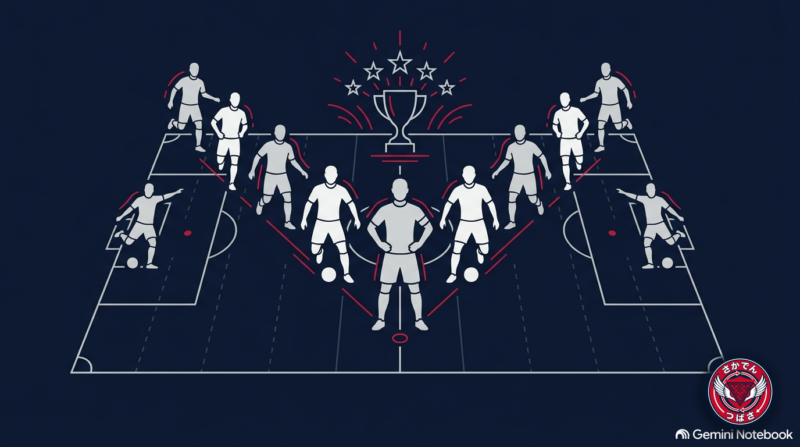
1. Nancy & AS Monaco (1984–1994) | The Genesis of Football Alchemy
After honing his experimental methods at Nancy, Wenger’s eye for raw potential first shook European football on the French Riviera.
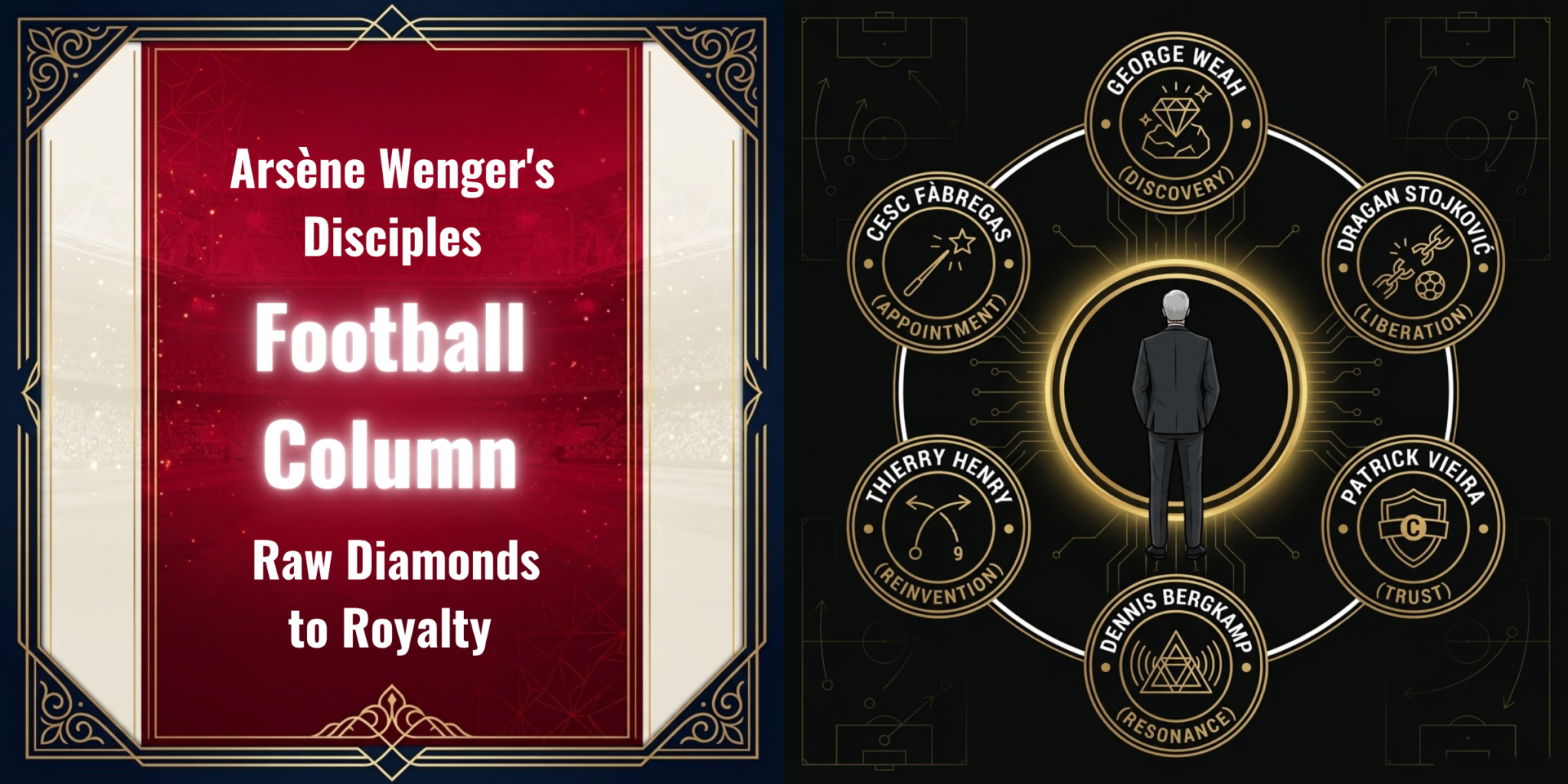
- George Weah (Liberia):
Spotted playing in Cameroon and signed for a mere £50,000, Weah found a paternal mentor in Wenger, who told him simply to “express himself without fear.” Under that trust, Weah exploded into a physical and technical juggernaut, culminating in his historic 1995 Ballon d’Or—remaining, to this day, the only African footballer ever to claim the sport’s ultimate individual crown. - Thierry Henry & Emmanuel Petit (France):
Both teenagers emerged through Monaco’s academy under Wenger’s tutelage. Handing a 17-year-old Henry his professional debut was merely the opening chapter of a partnership destined to conquer English football years later. - Glenn Hoddle (England) & Jürgen Klinsmann (Germany):
Suffocated by the rigidity of English football, the mercurial Glenn Hoddle found tactical liberation in Monaco, while German marksman Jürgen Klinsmann reached his peak clinical sharpness. Long before globalization became a buzzword, Wenger was already transcending cultural borders to maximize individual genius.
2. Nagoya Grampus Eight (1995–1996) | Pixie’s Awakening & The Japanese Epiphany
In 1995, Wenger embarked on a daring sojourn to Japan to take charge of a Nagoya Grampus Eight side languishing at the bottom of the J.League.
- Dragan “Pixie” Stojković (Serbia):
A maestro cursed with a volatile temper, Stojković had become an embittered genius frequently undone by referees’ decisions. Rather than scolding him, Wenger engaged in calm, Socratic dialogue: “Why expend your energy shouting before releasing the pass? Smile with the ball at your feet, and no defender on earth can stop you.” Reinvigorated, Pixie claimed the 1995 J.League MVP award. - Alexandre Torres (Brazil):
The son of Carlos Alberto, captain of Brazil’s legendary 1970 World Cup-winning side, Torres possessed genuine Seleção pedigree. Cruelly ruled out of Brazil’s triumphant 1994 World Cup squad by a last-minute injury—a twist of fate without which European giants might have snapped him up instead of Nagoya—he was hand-picked by Wenger after scouring video tapes. Installed as the defensive cornerstone, his razor-sharp anticipation, command of a high defensive line, and effortless ball-playing distribution brought world-class poise to Nagoya’s entire spine. - Franck Durix (France):
Brought from France as a deep-lying orchestrator, Durix sprayed pinpoint passes across both flanks. Together with Stojković, he embodied the cerebral, positional distribution that Wenger demanded. - Tetsuo Nakanishi, Takafumi Ogura, Tetsuya Asano, & Kenji Fukuda (Japan):
Fascinated by the Japanese work ethic and tactical discipline, Wenger instilled in them spatial awareness and the joy of ball progression. On New Year’s Day 1996, Nagoya lifted the Emperor’s Cup—their first major trophy—followed by the Japanese Super Cup. Wenger would forever credit his 18 months in Japan for sharpening his philosophical clarity: “It was a vital parenthesis that deepened my spiritual perspective on the game.”
3. The Golden Era of Arsenal (1996–2006) | The Invincibles & Symmetrical Elegance
At Highbury, Wenger engineered footballing perfection. The crescendo was the immortal 2003–04 “Invincibles” campaign (26 wins, 12 draws, 0 defeats).
- Patrick Vieira (France):
Plucked from AC Milan’s reserves just before Wenger’s official arrival, Vieira evolved into the prototypical modern box-to-box midfielder—a colossus combining crunching tackling with graceful, galloping surges through central channels. - Thierry Henry (France):
Marooned on the left wing at Juventus, Henry was rescued by Wenger and converted into a central striker. Operating in the left half-space and ghosting into the blind spots of opposing center-backs, Henry became Arsenal’s all-time leading scorer (228 goals), collecting four Premier League Golden Boots and transforming the forward position forever. - Dennis Bergkamp (Netherlands):
A disciple of Johan Cruyff, the Dutch visionary served as the primary architect of “Wengerball.” Bergkamp operated in the hole between the lines, executing delicate cushioned touches and telepathic flick-ons that set teammates clean through on goal. - Junichi Inamoto (Japan):
Signed in the summer of 2001, Inamoto represented a historic milestone for Asian footballers in the Premier League. While match minutes were scarce in an untouchable midfield, daily training battles alongside Vieira and Parlour accelerated his tactical sharpness, paving the way for his sensational two-goal showcase at the 2002 World Cup. - Robert Pirès (France) & Freddie Ljungberg (Sweden):
On the left, Pirès forged a symbiotic triangle with Henry and Ashley Cole; on the opposite flank, Ljungberg made incisive diagonal runs into the penalty box to finish off chances with lethal precision. - Sol Campbell (England), Kolo Touré (Ivory Coast), & Jens Lehmann (Germany):
Campbell joined on a seismic free transfer from arch-rivals Tottenham, partnering Touré—an unheralded utility prospect unearthed from Jean-Marc Guillou’s academy in Abidjan—to form an impregnable defensive axis backed by Lehmann’s fiery shot-stopping.
4. The Emirates Transition & Youth Pipeline (2006–2018) | Nurturing Prodigies Under Financial Austerity
With the relocation to the Emirates Stadium saddling the club with heavy debt repayments, Wenger was forced to abandon marquee signings, pivoting toward a global youth-scouting blueprint to keep Arsenal among the UEFA Champions League elite.
- Cesc Fàbregas (Spain):
Lured from Barcelona’s La Masia at 16, Fàbregas was handed the midfield keys following Vieira’s departure. Possessing extraordinary peripheral vision, he became the youngest club captain in decades and a metronomic assist machine. - Robin van Persie (Netherlands):
A volatile winger at Feyenoord, Van Persie was patiently refined by Wenger into a world-class number nine, culminating in a blistering 30-goal Premier League campaign. - Tomáš Rosický (Czech Republic) & Samir Nasri (France):
“The Little Mozart” brought rhythmic outside-of-the-boot passing and transitional dynamism, while Nasri excelled in tight half-spaces with velvet close control. - Aaron Ramsey (Wales) & Jack Wilshere (England):
Overcoming a catastrophic double leg fracture, Ramsey scored two dramatic FA Cup final winners—including an extra-time strike in 2014. Alongside him, academy phenom Jack Wilshere famously dismantled Barcelona’s midfield at just 19 years of age. - Mikel Arteta (Spain):
Arriving in 2011 to stabilize the midfield pivot, Arteta became Wenger’s on-pitch tactical lieutenant. Having internalized Wenger’s positional principles and organizational discipline, Arteta has since ascended to Arsenal’s helm—ending a 22-year wait for the Premier League crown in 2025–26 and guiding the club back to its first UEFA Champions League final in two decades. - Mesut Özil (Germany) & Alexis Sánchez (Chile):
When financial shackles finally loosened, Wenger secured these marquee match-winners. Özil’s effortless vision and Sánchez’s relentless pressing intensity helped deliver three FA Cup triumphs in four years (2014, 2015, and 2017).
🧠 Le Professeur’s Core Development Principles
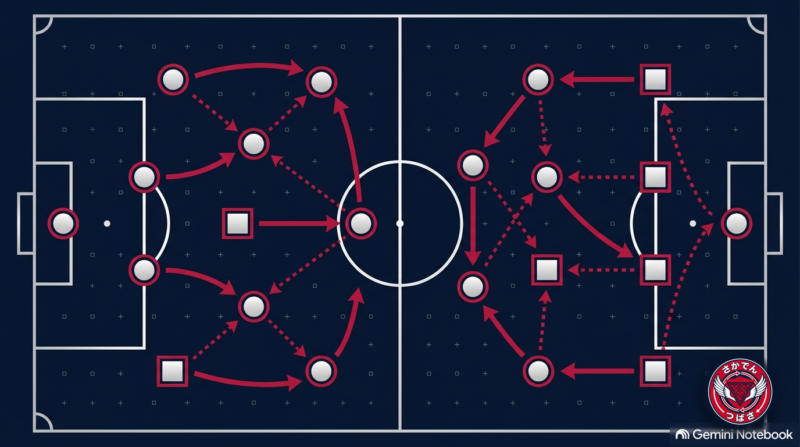
Examining the trajectories of these players across eras and continents reveals three foundational tenets underpinning Wenger’s methodology:
- The Art of Positional Reinvention (Tactical Conversion)
Henry from winger to unstoppable No. 9; Kolo Touré from utility midfielder and right-back to commanding center-back; Van Persie from flank creator to predatory finisher. Wenger looked beyond conventional positional tags, analyzing biomechanics, spatial intuition, and mental elasticity to construct ideal functional roles. - Empowering the Player’s Inherent Intellect
Unlike managers who orchestrate every movement through relentless touchline barking, Wenger championed player autonomy: “The manager’s duty is to cultivate the optimal environment in training; once they step over the white line, the decisions belong to the players.” His disciples matured because they were trusted to solve tactical puzzles in real time. - The Uncompromising Pursuit of Aesthetic Triumph
“If you only play to win, football degenerates into mere labor. When supporters leave the stadium, they should feel as though they have just experienced sublime music.” This artistic conviction remains permanently stitched into the identity of everyone who played beneath his banner.
🏁 Conclusion: The Enduring DNA of The Professor

Years have elapsed since Arsène Wenger bid his poignant farewell to the Emirates dugout, yet his footballing DNA pulses vibrant across the global landscape.
Whether observing Mikel Arteta’s tactical authority, Patrick Vieira and Thierry Henry leading from the touchline, or generations of purists who fell in love with one-touch passing corridors, the seeds planted by the lanky Alsatian visionary continue to bear golden fruit.
Which of Wenger’s legendary disciples resonated most deeply with your football soul?
Drop your thoughts and join the conversation on X (@jonorenjonoren)!
Keep smiling, and enjoy the beautiful game.
📢 Upcoming Chronicles (Next Releases)
This week on Sakaden Tsubasa, the Wengerian whirlwind reaches full throttle:
- Thursday’s Legend Profile:
Tactical Legend #28 | Thierry Henry: Wenger’s Supreme Masterpiece
A closer look at the French icon who redefined the modern striker under Wenger’s guidance—and why his brilliance still captivates football fans today. - Sunday’s Fantasy Selection:
Fantasy XI | Arsène Wenger’s Ultimate Disciples
From a glittering constellation of stars spanning Monaco, Nagoya, and Arsenal, we assemble the definitive starting eleven to execute the ultimate exhibition of “Wengerball.” Stay tuned!
👉 Players Archive | Legends & Tactical Profiles
👉 Fantasy XI & Selections Archive | All-Time Lineups & Tactical Experiments